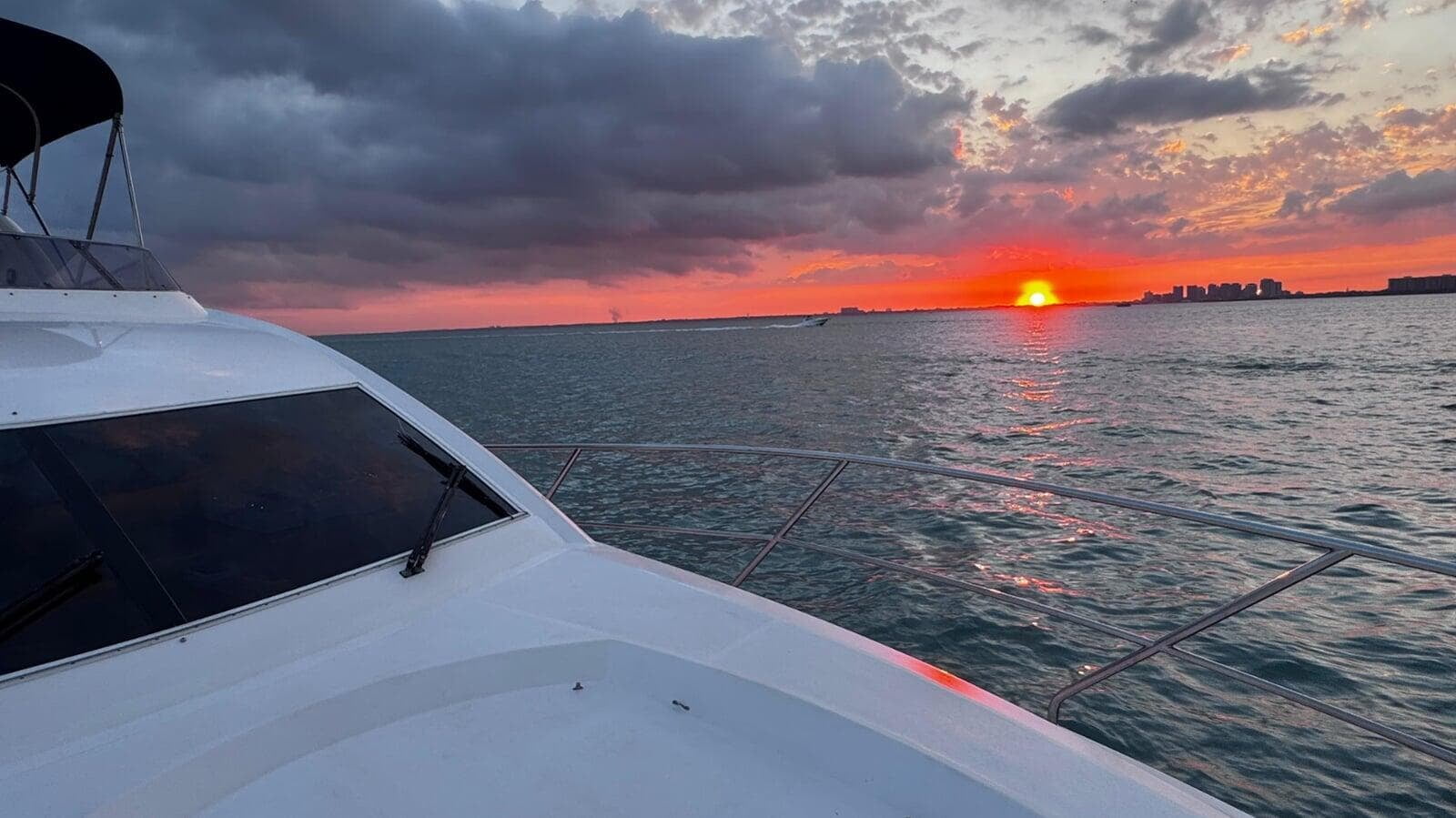
It is one of the most common questions we get before a booking, and it usually arrives slightly apologetically — someone was ill on a ferry once, or their partner was, and now they are wondering whether a six-hour charter is a bad idea. The honest answer is that most people who worry about this are fine on Biscayne Bay, and the reason has less to do with willpower than with where we actually go.
Seasickness is a disagreement between your inner ear and your eyes. Your inner ear registers motion, your eyes look at a cabin wall or a phone screen that appears perfectly still, and your brain cannot reconcile the two. That mismatch is what produces the nausea, the cold sweat and the headache. Everything that helps works by reducing either the motion itself or the size of the disagreement, which is why the conditions you are boating in matter as much as anything you take beforehand.
Why Biscayne Bay Is Not the Open Ocean
This is the part that reassures most people. Biscayne Bay sits behind Miami Beach and the barrier islands, which block the open-ocean swell entirely. There is no long rolling motion of the kind that makes people ill on a ferry crossing or an offshore fishing trip. The National Weather Service issues a separate marine forecast for the bay, and the routine reading is smooth to light chop. On a calm morning it can be close to mirror-flat.
Plenty of people who have been miserable on an ocean crossing have a completely uneventful day on the bay, and the difference is genuinely the water rather than anything they did differently. It is worth saying that carsickness and seasickness come from the same mechanism, so if you are prone to one you are more likely to notice the other — but a sheltered bay is about the gentlest version of the situation you can put yourself in.
What changes the ride is wind. Miami's sea breeze builds through the day, so an afternoon is reliably breezier than a morning, and when the wind gets up even a sheltered bay turns choppy — shallow water builds short, steep chop quickly. Heavy boat traffic on weekends adds wake to that. And heading out through the inlet into open water is a different experience altogether, which is worth knowing because it is the one part of a Miami charter that genuinely resembles what people are picturing when they ask this question.
What Actually Helps on the Day
The single most effective thing is where you sit. Motion is least felt toward the middle of the boat, and being outside in fresh air with a clear view beats sitting in an enclosed interior. Keep the horizon in view, that is not folklore, it is the one visual reference that does not move with the boat, so it gives your eyes and inner ear the same story to tell. The corollary is that phones, books and anything requiring close focus make things worse, because your eyes lock onto something still while your body feels the roll. If someone in your group is prone to this, the ride out is not the moment for scrolling.
Food and sleep matter more than people expect. Turning up exhausted makes motion sickness worse, and so does an empty stomach — small, plain meals beforehand and through the day work better than either skipping breakfast or eating something heavy and greasy. Stay hydrated. Strong smells aggravate it too, so if you are feeling delicate, move away from engine exhaust and food.
The awkward one on a BYOB charter is alcohol, which makes motion sickness measurably worse rather than settling nerves. That is not a reason to skip the cooler, but if you are the person in the group who worries about this, pacing yourself early in the day is genuinely more useful than most remedies. The same goes for a heavy night before.
About Medication
There are effective over-the-counter and prescription options, and the general principle is that they work far better taken before you feel unwell than after — some are meant to be taken the night before rather than on the morning. Beyond that we are not the right people to advise you. Doses and suitability vary a great deal, several common options cause drowsiness, and the guidance is genuinely different for children and during pregnancy. A pharmacist can sort this out in about two minutes, and that conversation is worth having before the day rather than at a marina.
Tell Us When You Book
This is the part people skip, and it is the one we can actually do something about. If you mention it when booking, the captain can plan a gentler day: staying inside the bay rather than running out through the inlet, choosing a calmer route, taking the swim stop somewhere sheltered, and keeping the transit legs shorter. A morning departure is usually smoother than an afternoon one for the sea-breeze reason above, so it is worth asking about the earlier slot if you have the choice.
Length is worth thinking about as well. Three to four hours is a reasonable way to find out how you feel about it without committing to a long day, and our guide to choosing a charter length covers the trade-offs. If it goes well, book longer next time.
If It Happens Anyway
Tell the crew early rather than quietly hoping it passes. They have seen it before, nobody is embarrassed, and there is far more they can do at the first sign than once someone is genuinely unwell, a better seat, water, a change of position, or simply anchoring sooner so the motion stops. In the meantime, put the phone away, get into fresh air where you can see the horizon, and sit still. Most people feel noticeably better within fifteen minutes or so, and anchored at a sandbar with the engines off, the problem generally disappears entirely.
FAQs
Is Biscayne Bay rough?
Not usually. The bay is sheltered by Miami Beach and the barrier islands, so it avoids open-ocean swell, and forecasts typically read smooth to light chop. Wind is what changes it — mornings are calmer because Miami's sea breeze builds through the day.
I get carsick. Will I get seasick?
You are more likely to notice motion than someone who does not, since both come from the same eye-and-inner-ear mismatch. That said, a sheltered bay on a calm morning is a much gentler proposition than open water, and plenty of people who get carsick are fine on the bay.
Where is the best place to sit if I feel queasy?
Toward the middle of the boat, outside in fresh air, where you can see the horizon. Avoid enclosed interiors and put screens away.
Does anchoring help?
Usually, yes. Most of the motion comes from being underway, so a swim stop at anchor is the calmest part of the day. Let the crew know and they can anchor sooner.
Still Unsure?
Tell us who in your group is worried and we will plan around it — a shorter charter, a morning slot, a route that stays inside the bay. If you are bringing children, our guide to chartering with kids covers the same ground from a parent's angle.
Or call or text us at (786) 575-5200.